Understanding the relationship between hegemony and education is essential for critically analyzing and transforming educational systems to promote inclusivity, social justice, and the empowerment of marginalized groups.

Influential Theorist

- Italian philosopher and social theorist
- Marxist – critically analyzing capitalist society, understanding social relations through the lens of class struggle, and working towards a socialist or communist vision of a more equitable and just society
- Imprisoned by Moussilini’s Fascist rule in the 1930s
3 Key Emphasis of Gramsci
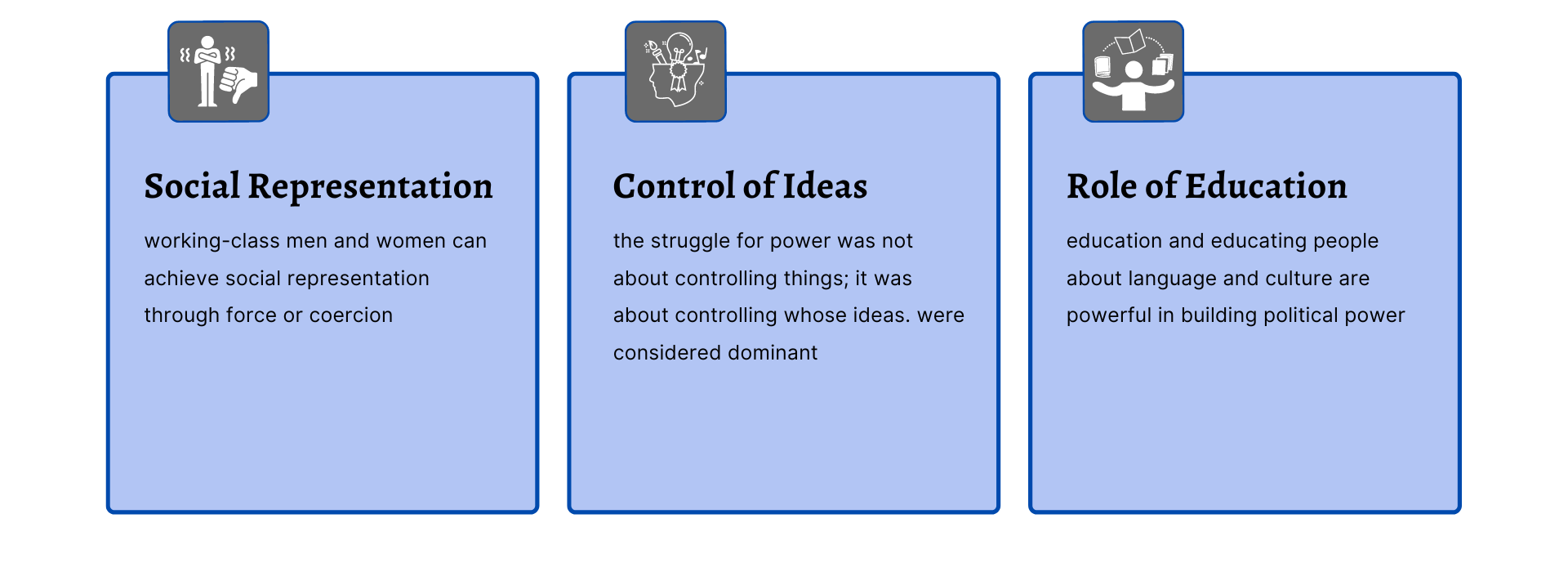

According to Gramsci, intellectualism is not confined to a specific group of people, as anyone can generate ideas. However, social position is not accessible to everyone. It should be noted that social capital and social role are distinct concepts. Social capital pertains to the benefits of resources and networks, whereas social role concerns the position and cultural expectations of a community.

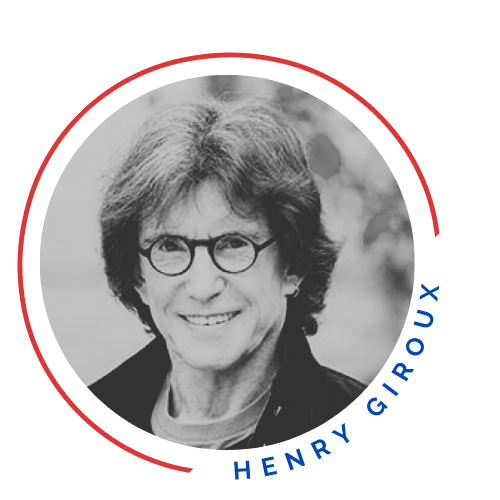
- Built on Gramsci’s work, Giroux expanded from two types of intellectuals to three types of intellectuals:
- traditional intellectuals – serve powerful economic and political elites
- critical intellectuals – acquire knowledge but not for the purpose of establishing political agency in students
- transformative intellectuals – acquire knowledge and support building political agency

Reference
Saltman, K. J. (2018). The politics of education: A critical introduction. Routledge.
 deshawnamccray.me