
The Role of Perception: What is Reality?
“Humans beings have a desire to perceive the reality they think they should perceive” (Fowler, 2013, p. 148). The question is “why?” Perception is a critical element with regards to issue definition and agenda setting
Two Stages of the Policy Process
Issue Definition
- Transform a problem into an issue the government can address
- Communication of the issue is written and spoken
- Visual representation of the issue presented to the public to gain support
- Must be defined well or it will not be perceived as important enough to be an issue
Agenda Setting
- Multiple issues that fall under one particular policy domain
- Education Policy Domain includes professional conferences, education journals, educators, mass-media, and general public
- There are four types of agendas: governmental, media, public, and professional
Take 1-minute to write down as many education issues you can think of. Take time to identify 1-2 issues and see if you can answer the question.

What is EPPRC & Why Should I Care
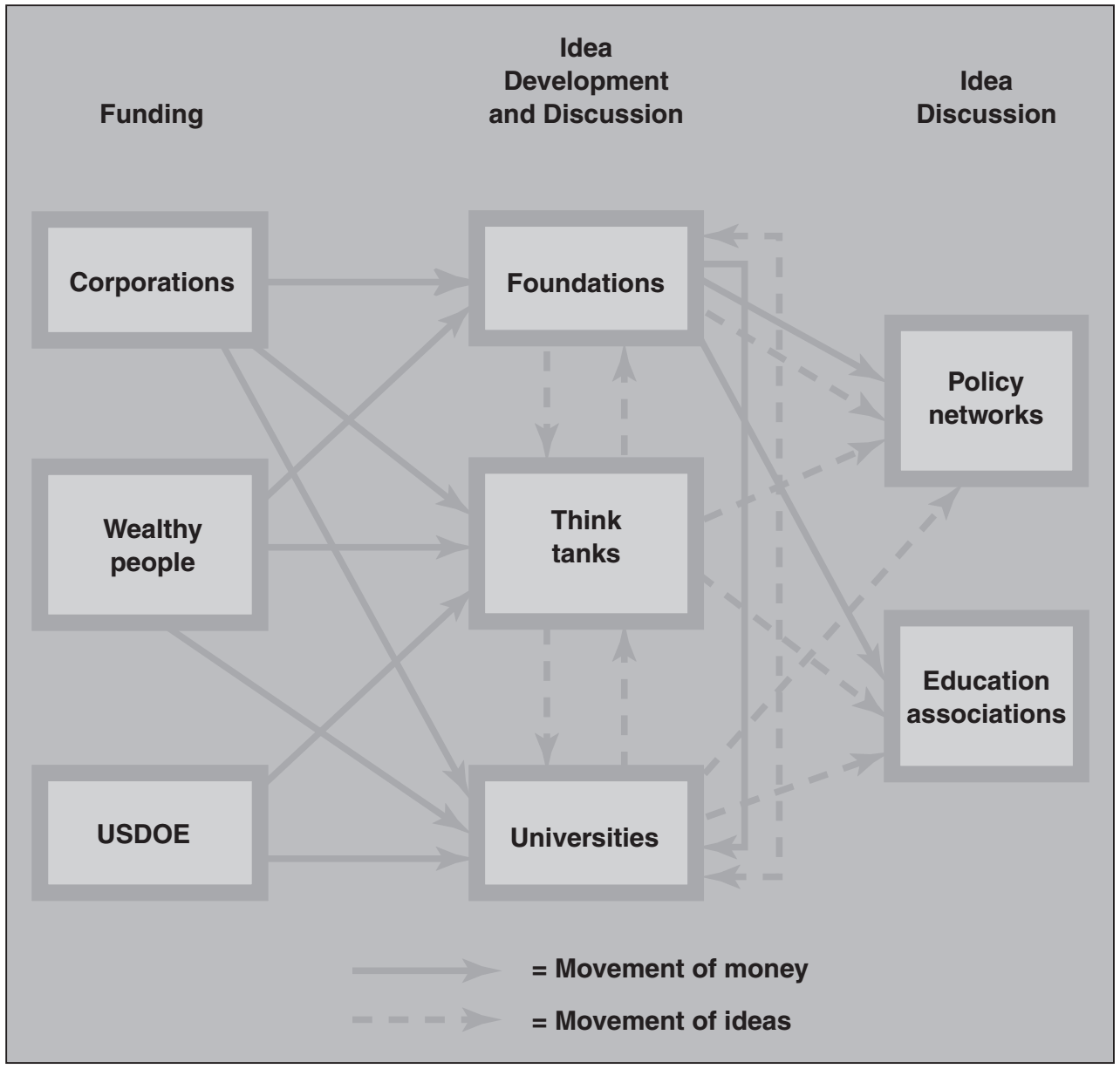
Most education policy matters are typically discussed and shaped within an interconnected network of organizations and individuals, commonly known as the education policy planning and research community. EPPRC has three major funding sources: corporations, wealthy individuals, and the government (Fowler, 2013). Below is a figure from Fowler (2013) on page 151.
Power & Policy Agenda

Even if the issue is defined and the steps are taken to put the policy agenda forth, the key to a successful policy process involves exercising power. It is important to realize that policy agendas are influenced by groups that are more powerful; therefore, individuals from disenfranchised communities are disempowered (Fowler, 2013). Due to disempowered groups feeling powerless with their voice, they can tend to turn to violence as a way to exercise “power.”
References
- Fowler, F. C. (2013). Policy studies for educational leaders: An introduction. Prentice Hall.
- On the Mind. (2021, May 6). What is perception? Faculties of the mind [Video]. YouTube. https://youtu.be/3Xpaj3hbIOs?si=X2W3DHtjBtymyJfp
 deshawnamccray.me