

Power, Influence, Control
There are multiple definitions for micropolitics, but the variations include three commonalities: power, influence, and control (p. 31).
Interaction, or interplay, is a key element within micropolitics because of the influence power has on the interactions, even when subtle. Examples include decisions about who gets what classroom space and Christian players being able to pray before a game as a group.
Two Approaches to Micropolitics
There are two approaches that define micropolitics in education, the structural organization lens and the sociocultural lens (p. 32).

Structural Organizational Lens
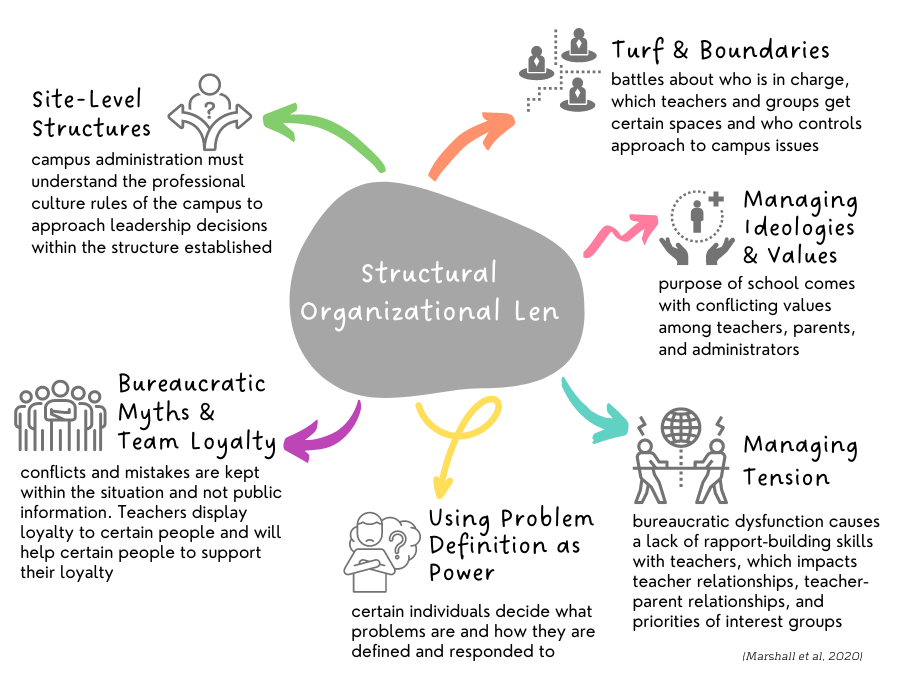
The site is the focus of the structural, organizational lens as it consists of the physical spaces within the site and the symbolism of the power of people who occupy those spaces and communicate how they are utilized. The unspoken rules within a site demonstrate certain people’s power, influence, and control. The informality of the rules alone is what creates the power. For example, the site has an organizational chart; however, the chart does not indicate how and what is communicated through channels for approval. Additionally, certain people within the site have defined roles in addition to their public-facing titles.
Micropolitics & Policy Implementation
The implementation of policy is dependent on the interpretation of the site leaders.
Sociocultural Power Dynamics
Sociocultural power dynamics shift the lens from the site to the individuals. The same power dynamics within the education system occur within the United States’ political structure. Parents and students are very much aware of the classism within education, and students of color feel pressure to act “White.” Through interactions, individuals develop co-construction of their sense of self (Marshall et al, 2020).
Language
Culture and identity are found in the language used. for example, Native Americans were not allowed to speak their native language (Marshall et al, 2020). The language used in policies also reinforces the discrimination and inequities within the education system.
Microinteractions
Microaggressions and intersectionality are two ways institutional discrimination manifest itself. The behaviors of students and the lack of action addressing microaggressions impact academic achievement and mental health (Marshall et al, 2020).
Reference
Marshall, C., Gerstl-Pepin, C., & Johnson, M. (2020). Educational politics for social justice. Teachers College Press.
 deshawnamccray.me