People navigate and understand the world differently from animals, who rely on their senses to make connections. Humans have an additional ability called thought language, meaning we can think and use language to express our thoughts. In understanding the world, subjectivity and objectivity are united.
Orienting ourselves in the world cannot be seen only as something that happens inside our minds (subjective) or as a simple mechanical process (objective). Instead, it is an event where both our personal experiences and the external reality come together.
Nutritionist Concept

- Common in educational practice
- Illiterates are considered undernourished, needing bread of the spirit
- When words lose their ability to connect they become just words and illiterates are expected to just consume them passively
Sick Man

- Viewing illiterate people from marginalized communities as deficient or lacking as though they were sick
- Literacy is the medicine to help return into society
- Educators are benevolent counselors looking for illiterates to restore back to life
The Act of Knowing
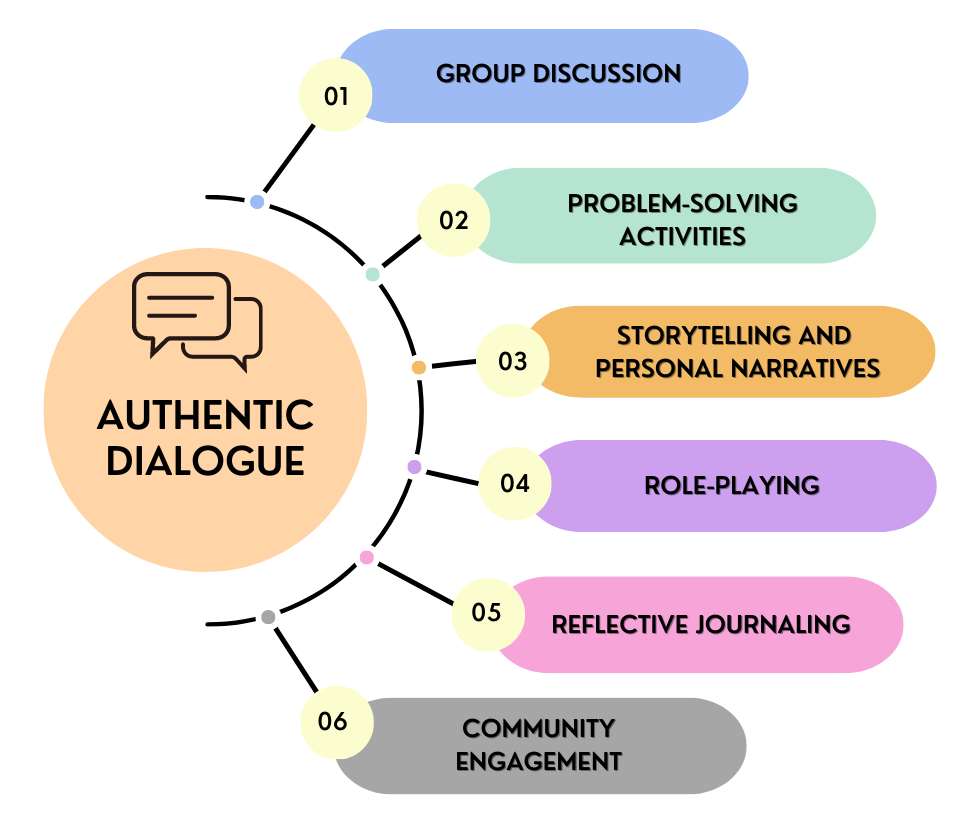
Adult literacy requires teachers and learners to engage in authentic dialogue to bring meaning to words and the social experiences and connections within society. Below are a couple of methods for authentic dialogue.
Reference
Freire, P. (1985). The politics of education: Culture, power, and liberation. Greenwood Publishing Group.
Paulo Freire – An incredible conversation [Video]. (2009, December 30). YouTube. https://youtu.be/aFWjnkFypFA
 deshawnamccray.me