Chapter 2 and Chapter 3 Overview
Chapter 2 – History of Instructional Design & Technology
“Instructional media has been defined as the physical means via which instruction is presented to learners” (Reiser & Dempsey, 2017, p. 8). Instructional media can include: live instructor, textbook, and computer; however, historically “three primary means of instruction prior to the twentieth century include – the teacher, the chalkboard, and the textbook” (Reiser & Dempsey, 2017, p. 8).
Common Uses for Instructional Media:
- School Museums: films, slides, and photographs
- World War II: audiovisual devices, training films, overhead projectors, simulators
- Television: educational television, junior-college curriculum,
- Computer: education, training, computer-assisted instruction (CAI),
- Recent Developments: Internet, CD-Rom, satellite, smartphone, tablets
“Instructional design and technology has been closely associated with the use of systematic instructional design procedures” (Reiser & Dempsey, 2017, p. 13). Several procedures/models have been developed to include: the system approach, instructional system design (ISD), instructional development, and instructional design (Reiser & Dempsey, 2017).
Development of Instruction Design
- World War II: research to create training materials, skills assessments
- B.F. Skinner identifies increased human learning and desired characteristics of effective instructional materials
- Robert Mager recognized the need to teach educators how to write objectives
- Criterion-referenced tests measure performance level of individual
- Robert Gagne developed five domains of learning to explain hierarchy of learning and nine events of instruction
- Michael Scriven introduced formative evaluation with the idea that learners could try a draft and it could be revised before a final product
- The Internet allows for instruction to be delivered online
- Evaluating timeliness of ADDIE model
Chapter 3 – Characteristics of Foundational Instructional Design Models
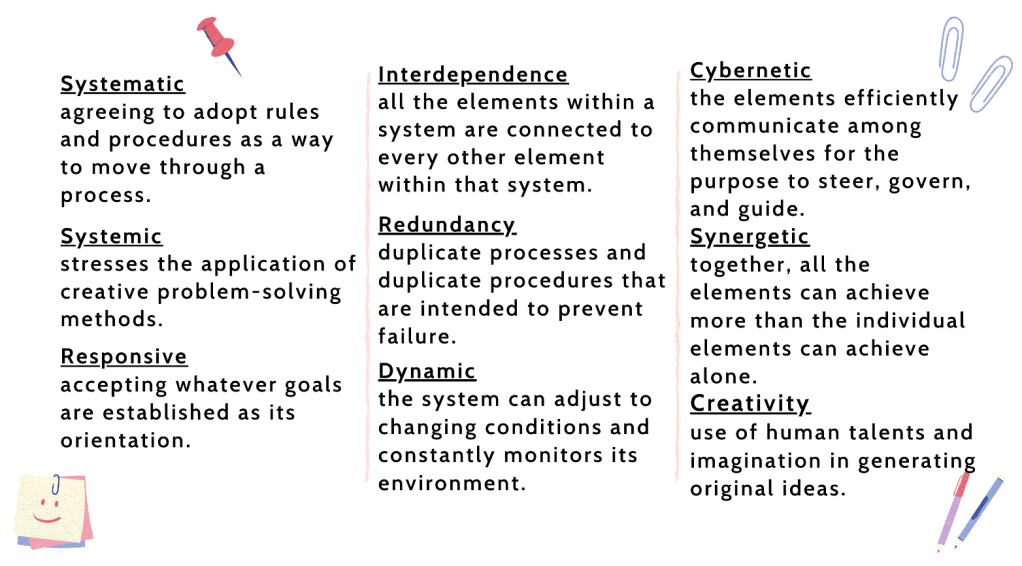
Nine Features of General System Theory
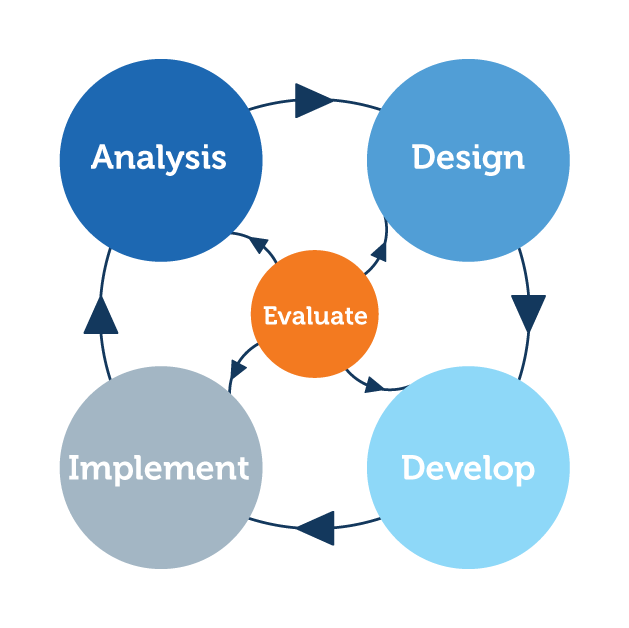
“ADDIE is based on a systematic product development concept” (Reiser & Dempsey, 2017, p. 24). Furthermore, Reiser and Dempsey (2017) state, “creating products using an ADDIE process remains one of the effective tools; however, ADDIE is not a specific, fully elaborated model in its own rights, but rather a paradigm that refers to a family of models” (Reiser & Dempsey, 2017, p. 24).
Seven Characteristics of Instructional Design
- Student-centered process
- Goal-oriented process
- Creative process
- focuses on meaningful performance
- assumes outcomes are measurable, reliable and valid
- empirical, iterative, and self-correcting process
- typically a team effort
References
Reiser, R.A. & Dempsey, J.V. (2017). Trends and issues in instructional design and technology. (4th. ed.). Pearson: Boston, MA.
 deshawnamccray.me